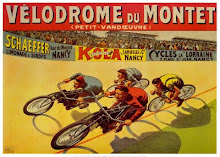
Soon coming--are you ready? We are ready for you--the course has recently been mowed, fallen trees and branches removed, and the course blown clean--only thing we need is some snow and rain--well, maybe.
Registration is still open, here: http://www.bikereg.com/events/register.asp?eventid=14370
This will be an even better event than last year--Lester's BBQ will be on site again, as will Hot Shots [aka the coffee guy.]
Also due to be on site will be the Shimano 'Cross Neutral Support team--the same folks and equipment that we deployed at Gloucester and Providence.
See you there.
Friday, November 11, 2011
Friday, June 10, 2011
A conversation with Coach Kurt
A Conversation with Kurt Begemann, Cycle Loft's In-House Coach: This first appeared in 2008 upon Kurt's arrival to the Cycle Loft. [Check back soon for similar Q&A with Kurt about the benefits of Track Cycling. In 2010, Kurt became the Director of the Northeast Velodrome & Cycling Park in Londonderry, NH. He continues to coach riders, new and experienced, on the etiquette and discipline necessary to become a successful track racer. He will be coaching an introductory intensive course on Track Cycling June 11 & 12. See here for details on this "Try the Track Clinic."]
Kurt Begemann, USA Cycling Level II Coach, and member of Cycle Loft's staff answers Cycle Loft owner, Jeff Palter's questions about coaching. I hope you find it helpful, and that you will contact Kurt at coaching@cycleloft.com for more information about our services. Thanks for reading, Jeff Palter, Owner, The Cycle Loft.
JP: How long have you been a coach?
KB: I started coaching on the side in 1998, and made a full time transition into coaching in 2004. I'm presently a USA Cycling Level I I Coach and will be coaching two upcoming Federation Developmental training camps this summer in Trexlertown, PA at the National Track Training Center. [Kurt has since participated in several USAC U23 Talent ID Camps in the Lehigh Valley, PA area.]
JP: How did you transition from a rider, to industry professional, to fitting and coaching?
KB: Shortly after I had become a full time rider on the Zimbabwe National Team back in 1991, I realized that I wanted to work full time in the cycling industry, no matter what the capacity. Cycling is very much a “lifestyle” sport, and once you have been so immersed in it as a professional rider, it is easy to stay in the game. By the time your racing career is over, you have a vast knowledge base in the sport, and the transition is natural. I started focusing on fitting about ten years ago, when I realized that many of the reasons I had been positioned a certain way on the bike were nothing short of old wives' tales. I was intrigued by finding a system that was based on scientific proof, and helping people get correctly positioned. Roughly at the same time I started working with riders in a coaching capacity, knowing that most people learn from their friends, and friends of friends. Having come from a disciplined national program, I felt that I had a lot of knowledge to impart.
JP: What, if any, connection(s) is there between coaching and bicycle fitting?
KB: There is more of a connection than some people might understand. One example is that pedaling style can often effect bike fit, and vice versa. Bike fitters who are trained in ergonomics, but have little experience on the bike themselves often miss this connection. Often during a bike fit, I will end up segueing into pedaling dynamics, and coaching a rider on a more efficient way to pedal. This will lead into the stability of core muscles, and the recruitment of power. That can move onto balance and bike handling, and the discussion can snowball from there.
JP: I’ve read a lot of about video programs for fitting and the use of lasers and other high tech stuff, and in fact we have many of these tools here at the Loft. Any comments?
KB: Nowadays bike fitting has become quite the science, and there are quite a few systems out there in the marketplace. Twenty years ago there were many old wives' tales about fitting, which had no scientific proof as to why they would be relevant to being efficient or effective on the bike. Around 2001 or so, some of the best bike designers and ergonomists started compiling real scientific reasons as to why we are positioned a certain way. Ben Serotta was instrumental in this, and the info he gained along with others, hasn’t changed much in the last 10 years or so. But people are continually trying to show new ways of conveying that information, with lasers, cameras, power meters etc. Often they can be helpful, but sometimes they can confuse things even more. The important thing to remember is that computers only really tell us what we ask them to, and if you’re working with a trained ergonomist who has a good eye and you believe in their ability, they can get you where you need to be without the tech show. Don’t get me wrong, there is a coolness factor to all the high tech stuff, but none of that is a substitute for an experienced eye.
JP: What would/could a potential client gain from having a coach, especially if not an elite athlete?
KB: In my opinion, you don’t have to be an elite athlete to be open minded and willing to learn. In fact, most elite athletes, or riders who have been in the game a long time are actually impossible to coach. They figure that they’ve been doing it along time, and their way is the only way. But I often ask them, who taught them what they know, and who were their teachers' teachers? A professional coach will help you target a goal, work on your weaknesses, and help you develop your strengths. They will help you obtain a better knowledge base of the sport, and educate you on how it’s different characteristics, like equipment, nutrition, training and strategy all relate to one another.
JP: How many days per week does one need to ride to work well with a coach?
KB: If you want to make gains of any sort, then you have to ride a minimum of 4 days a week. If you want to be competitive, you’ll have to commit to 5 days a week, and if you’re serious about your competitiveness, then you’ll need to go to 6.
JP: I know there are heart rate monitors out there, and now power meters? Does one need one or both? What’s the “real" deal?
KB: This is a complicated one. Both are very helpful training tools, which can also become very destructive crutches. The best riders in the world use Power Meters to train with, but they very seldom (if ever), use them to race with. The same can be said about Heart Rate monitors. Too many athletes end up becoming anchored (literally) to these tools, and not developing their own intuition or feel for their own effort. Great riders such as Merckx, Hinault, Roche and Lemond all rode using the "old fashioned" RPE scale. RPE or Rate of Perceived Exertion is still an extremely accurate way to train, and is in fact the most accurate way to race a time trial or break away effort. I like to work with this first and instill that a rider has to know their body and be able to accurately gauge their own effort first, before taking them on to a Heart Rate monitor and then ultimately a Power Meter. Having all the training tools in the world won’t help one iota, unless you know how to use them. How can you interpret the knowledge from your efforts on your training devices, if you can’t accurately gauge your efforts?
JP: What differentiates your coaching style and services from those of some of the national companies I see marketed?
KB: I actually meet with my riders in person, and ride with them weekly. You wouldn’t take a music lesson over the phone, so why would you be coached by someone over the internet. People often see the successful relationships between star cyclists and successful coaches and forget that these people have met personally many, many times, and have relationships that span months, if not years. Working with someone who hasn’t personally seen you, your position on a bike, your pedaling style, and your execution techniques, and then expecting to improve over a couple of months, is more often than not…a set up for disappointment.
I don’t just prescribe training plans. I teach you how to execute them properly. How to ride more efficiently, and how to handle you bike more confidently. Ultimately be a more fully prepared and experienced athlete. Too many coaches just prescribe training programs, straight out of the science lab. Very few coaches actually teach people how to ride or race their bikes. I still do that.
JP: If one wants a cycling computer, do recommend one with a cadence feature?
KB: Yes. Cadence and its different characteristics are the basis of all cycling. Cadence is always relevant. The sooner you understand this as an athlete, the quicker you will improve.
JP: I’ve heard the statement, “ride faster by riding slower.” Can you briefly explain this?
KB: Briefly stated…it’s about economy of effort. Often cyclists equate riding hard or fast by riding in the big chainring (typically a 53T ring), and they think that riding big gears day in and day out will make them faster and stronger. That’s a recipe for over-training. The bottom line is that there is a very real science to how the body works efficiently and effectively. It incorporates applying workload, and then allowing time for adaptation to take place. That means hard days balanced by easy days, and big gears balanced by easy gears.
JP: The Loft offers “fitness/VO2 testing,” how does this interact, intersect, or connect with your coaching?
KB: Fitness testing is a good way for you to learn about what size engine is in your ribcage, and what types of cycling you might excel at. It can also be helpful in determining a nutrition plan, or to determine short comings in your training. Once you’ve done the testing and have the information…then it’s like…okay…what are we going to do with this now? It’s helpful in determining what you’re capable of in cycling, and if anything…you’ll learn a lot about yourself in a short span of time.
JP: Do I need a fitness test before I start working with a coach?
KB: No you don’t, but it is very helpful if you can do one. It’ll take some of the guessing out of “why you are at where you are at”. So information is always better than none at all. I will always recommend doing one, but it’s certainly not a requirement.
JP: While working with a coach, how long before one would start to see results?
KB: It takes a while to make gains in the sport of cycling…and unfortunately that’s just the way it is. When you look at the big names in the sport, particularly in this country it shouldn’t surprise you that the majority of them were racing as juniors. It’s very rare to have someone pick up the sport as a young adult, and go far in it. With that knowledge, you need to understand that it takes time to learn things, put them into practice, and then make gains. Especially in a complex and multifaceted sport such as cycling.
That’s why I have a minimum commitment of 3 months when you sign up on coaching with me. Different people learn at different rates, and I’ve had some athletes learn in two weeks, what others have in two months. I have often felt that ones ability to learn and absorb has a direct connection to their enthusiasm and openness. The old adage of “what you put in, you get out”…very much applies.
Kurt Begemann, USA Cycling Level II Coach, and member of Cycle Loft's staff answers Cycle Loft owner, Jeff Palter's questions about coaching. I hope you find it helpful, and that you will contact Kurt at coaching@cycleloft.com for more information about our services. Thanks for reading, Jeff Palter, Owner, The Cycle Loft.
JP: How long have you been a coach?
KB: I started coaching on the side in 1998, and made a full time transition into coaching in 2004. I'm presently a USA Cycling Level I I Coach and will be coaching two upcoming Federation Developmental training camps this summer in Trexlertown, PA at the National Track Training Center. [Kurt has since participated in several USAC U23 Talent ID Camps in the Lehigh Valley, PA area.]
JP: How did you transition from a rider, to industry professional, to fitting and coaching?
KB: Shortly after I had become a full time rider on the Zimbabwe National Team back in 1991, I realized that I wanted to work full time in the cycling industry, no matter what the capacity. Cycling is very much a “lifestyle” sport, and once you have been so immersed in it as a professional rider, it is easy to stay in the game. By the time your racing career is over, you have a vast knowledge base in the sport, and the transition is natural. I started focusing on fitting about ten years ago, when I realized that many of the reasons I had been positioned a certain way on the bike were nothing short of old wives' tales. I was intrigued by finding a system that was based on scientific proof, and helping people get correctly positioned. Roughly at the same time I started working with riders in a coaching capacity, knowing that most people learn from their friends, and friends of friends. Having come from a disciplined national program, I felt that I had a lot of knowledge to impart.
JP: What, if any, connection(s) is there between coaching and bicycle fitting?
KB: There is more of a connection than some people might understand. One example is that pedaling style can often effect bike fit, and vice versa. Bike fitters who are trained in ergonomics, but have little experience on the bike themselves often miss this connection. Often during a bike fit, I will end up segueing into pedaling dynamics, and coaching a rider on a more efficient way to pedal. This will lead into the stability of core muscles, and the recruitment of power. That can move onto balance and bike handling, and the discussion can snowball from there.
JP: I’ve read a lot of about video programs for fitting and the use of lasers and other high tech stuff, and in fact we have many of these tools here at the Loft. Any comments?
KB: Nowadays bike fitting has become quite the science, and there are quite a few systems out there in the marketplace. Twenty years ago there were many old wives' tales about fitting, which had no scientific proof as to why they would be relevant to being efficient or effective on the bike. Around 2001 or so, some of the best bike designers and ergonomists started compiling real scientific reasons as to why we are positioned a certain way. Ben Serotta was instrumental in this, and the info he gained along with others, hasn’t changed much in the last 10 years or so. But people are continually trying to show new ways of conveying that information, with lasers, cameras, power meters etc. Often they can be helpful, but sometimes they can confuse things even more. The important thing to remember is that computers only really tell us what we ask them to, and if you’re working with a trained ergonomist who has a good eye and you believe in their ability, they can get you where you need to be without the tech show. Don’t get me wrong, there is a coolness factor to all the high tech stuff, but none of that is a substitute for an experienced eye.
JP: What would/could a potential client gain from having a coach, especially if not an elite athlete?
KB: In my opinion, you don’t have to be an elite athlete to be open minded and willing to learn. In fact, most elite athletes, or riders who have been in the game a long time are actually impossible to coach. They figure that they’ve been doing it along time, and their way is the only way. But I often ask them, who taught them what they know, and who were their teachers' teachers? A professional coach will help you target a goal, work on your weaknesses, and help you develop your strengths. They will help you obtain a better knowledge base of the sport, and educate you on how it’s different characteristics, like equipment, nutrition, training and strategy all relate to one another.
JP: How many days per week does one need to ride to work well with a coach?
KB: If you want to make gains of any sort, then you have to ride a minimum of 4 days a week. If you want to be competitive, you’ll have to commit to 5 days a week, and if you’re serious about your competitiveness, then you’ll need to go to 6.
JP: I know there are heart rate monitors out there, and now power meters? Does one need one or both? What’s the “real" deal?
KB: This is a complicated one. Both are very helpful training tools, which can also become very destructive crutches. The best riders in the world use Power Meters to train with, but they very seldom (if ever), use them to race with. The same can be said about Heart Rate monitors. Too many athletes end up becoming anchored (literally) to these tools, and not developing their own intuition or feel for their own effort. Great riders such as Merckx, Hinault, Roche and Lemond all rode using the "old fashioned" RPE scale. RPE or Rate of Perceived Exertion is still an extremely accurate way to train, and is in fact the most accurate way to race a time trial or break away effort. I like to work with this first and instill that a rider has to know their body and be able to accurately gauge their own effort first, before taking them on to a Heart Rate monitor and then ultimately a Power Meter. Having all the training tools in the world won’t help one iota, unless you know how to use them. How can you interpret the knowledge from your efforts on your training devices, if you can’t accurately gauge your efforts?
JP: What differentiates your coaching style and services from those of some of the national companies I see marketed?
KB: I actually meet with my riders in person, and ride with them weekly. You wouldn’t take a music lesson over the phone, so why would you be coached by someone over the internet. People often see the successful relationships between star cyclists and successful coaches and forget that these people have met personally many, many times, and have relationships that span months, if not years. Working with someone who hasn’t personally seen you, your position on a bike, your pedaling style, and your execution techniques, and then expecting to improve over a couple of months, is more often than not…a set up for disappointment.
I don’t just prescribe training plans. I teach you how to execute them properly. How to ride more efficiently, and how to handle you bike more confidently. Ultimately be a more fully prepared and experienced athlete. Too many coaches just prescribe training programs, straight out of the science lab. Very few coaches actually teach people how to ride or race their bikes. I still do that.
JP: If one wants a cycling computer, do recommend one with a cadence feature?
KB: Yes. Cadence and its different characteristics are the basis of all cycling. Cadence is always relevant. The sooner you understand this as an athlete, the quicker you will improve.
JP: I’ve heard the statement, “ride faster by riding slower.” Can you briefly explain this?
KB: Briefly stated…it’s about economy of effort. Often cyclists equate riding hard or fast by riding in the big chainring (typically a 53T ring), and they think that riding big gears day in and day out will make them faster and stronger. That’s a recipe for over-training. The bottom line is that there is a very real science to how the body works efficiently and effectively. It incorporates applying workload, and then allowing time for adaptation to take place. That means hard days balanced by easy days, and big gears balanced by easy gears.
JP: The Loft offers “fitness/VO2 testing,” how does this interact, intersect, or connect with your coaching?
KB: Fitness testing is a good way for you to learn about what size engine is in your ribcage, and what types of cycling you might excel at. It can also be helpful in determining a nutrition plan, or to determine short comings in your training. Once you’ve done the testing and have the information…then it’s like…okay…what are we going to do with this now? It’s helpful in determining what you’re capable of in cycling, and if anything…you’ll learn a lot about yourself in a short span of time.
JP: Do I need a fitness test before I start working with a coach?
KB: No you don’t, but it is very helpful if you can do one. It’ll take some of the guessing out of “why you are at where you are at”. So information is always better than none at all. I will always recommend doing one, but it’s certainly not a requirement.
JP: While working with a coach, how long before one would start to see results?
KB: It takes a while to make gains in the sport of cycling…and unfortunately that’s just the way it is. When you look at the big names in the sport, particularly in this country it shouldn’t surprise you that the majority of them were racing as juniors. It’s very rare to have someone pick up the sport as a young adult, and go far in it. With that knowledge, you need to understand that it takes time to learn things, put them into practice, and then make gains. Especially in a complex and multifaceted sport such as cycling.
That’s why I have a minimum commitment of 3 months when you sign up on coaching with me. Different people learn at different rates, and I’ve had some athletes learn in two weeks, what others have in two months. I have often felt that ones ability to learn and absorb has a direct connection to their enthusiasm and openness. The old adage of “what you put in, you get out”…very much applies.

Tuesday, March 15, 2011
New Dates for Masters Track Nationals July 26- July 31
USA Cycling announces a revision to the National Championships Calendar for Masters Track Nationals:
New dates are July 26-July 31, 2011 at the Valley Preferred Cycling Center in Trexlertown, PA.
Monday, January 31, 2011
1st Annual Swap Meet & Bicycle Flea Market

FIRST ANNUAL SWAP MEET AND BICYCLE FLEA MARKET
WHEN: Saturday April 30th, 2011. (10 a.m. – 3 p.m.)
WHERE: Northeast Velodrome and Cycling Park, 29 Grenier Field Road, Londonderry, NH, 03053
VENDORS:
This is the perfect opportunity to move your old cycling stuff and turn what’s sitting around gathering dust into cash. Bikes, winter clothing, accessories, samples, time to clear that stuff out!
· Bicycle Shops: $20.00 per 10 x 10 space.
· Bicycle Reps: $15.00 per 10 x 10 space.
· Individual merchants: $10.00 per 10 x 10 space.
· (Gates open at 8:00 a.m. for set-up.)
ATTENDEES:
This is where you can pick up great deals on all types of cycling equipment. Whether you’re a collector, racer or recreational rider, you just might find what you’re looking for here. Next seasons cyclocross bike, or that winter jacket you needed.
· $5.00 entry, gates open at 10 a.m.
Take a drive up to Londonderry and enjoy the spring day. Hang out with other cyclists and see what great deals you can find. Music and food vendors all day!!!
Contact: Kurt Begemann (Velodrome Director)
Phone: 781-462-5633
Email: director@northeastvelo.com
Check our website for more details: http://www.northeastvelo.com/
Friday, November 26, 2010
Season 2010
Fall is finally here, Velocross 2010 was last weekend, Thanksgiving was yesterday, and BMX racing was done Halloween weekend...that means that unfortunately the season has some to an end. A special thank you to everyone that has made the Northeast Velodrome and Cycling Park's 2010 season a great one. Please keep checking in for updates throughout the Winter as we start planning for the 2011 season that will have even more in store for riders. Til then, thank you, be well, and stay tuned.
Thursday, October 21, 2010
Amsterdam 6 Day: Kacey Manderfield -- Nights Four, Five & Six
 Night four of the 2010 Amsterdam Six Day, saw the start of the UIV U23 “mini six” which is in fact only three days long. The first Six Day of the winter season is always dangerous as riders nerves run high while they “break the ice” of the Six Day Season. And with this comes the mistakes and the crashes.
No fewer than three separate crashes took place in the first race of the U23 riders. Two riders breaking collarbones and three others leaving the track with serious wood burn. The young inexperienced South African team did well however, in their first European Event, staying out of trouble and staying upright.
 In the women’s event, Kacey Manderfield dropped further back to 9th place overall. Manderfield and fellow American Mandy Marquardt (lying 14th overall), are struggling to race against the aggressive European riders. Both are products of the defensive style of racing, seen in most female American track racing. Now in the depth of offensive racing, the riders are struggling to hold their position and put themselves in contention to score points. They will need to adopt a more proactive approach if they want to survive in the European peleton.
In the Sprint tournament, the Americans didn’t fair as well as last night, but Gideon Massie still managed 2nd in the Match Sprints, and Dean Tracy 2nd in the Keirin.
The German pairing of Roger Kluge and Robert Bartko move back into first position in the Six Day, fighting hard against Franco “Marvelous” Marvulli and Dutch National Champion, Nici Terpstra.
***Nights Five & Six:
Amsterdam Six Day – Nights 5 and 6
The last two nights have not done too much in terms of changing the standing in the overall classification. Dutch rider Vera Koedooder is still dominating the fields with wins in both events on Friday Night (Night 5). Irish rider Jennifer O’Rielly, was the only international rider to challenge the Dutch superstar, with a close 2nd place in the points race.

Saturday evenings final night of racing was very fast, as none of the riders felt like they had anything to loose. Koedooder was out of reach with regards to loosing the Six, and could afford to throw caution to the wind with fierce attacks almost from the get go. The remaining riders would do all they could to hang on and hope that the race fragmented enough as to shuffle the over-all standings for the general classification. If Koedooder wasn’t on the front, anyone and everyone else was.
For the Northeast Velodrome rider Kacey Manderfield, the weekend finished in disappointment as she slipped further down the GC to 11th overall, only 1 point behind Samatha Van Steenis and a top 10 placing. The crash on the very first night had a major impact on Manderfield who was clearly not her confident self as the week progressed.
“Kacey is a good rider who doesn’t usually get intimidated by close quarter riding,” said her coach Kurt Begemann. “But anyone who falls down from the top of a 52 degree banked track at 25 mph is going to be shaken for a few days. It’s a pity it went that way, but that’s racing”, said Begemann.
For the Northeast Velodrome and Cycling Park, they can say that they had a rider represented in a European Pro Six Day Event. Not too many Velodromes in the US can say they are sponsoring homegrown talent and helping them get over-seas experience. Hopefully this is a first step in fostering more riders into the European Six Day Scene.
For the American Sprinters, they capped the week off well, with Gideon Massie finishing 2nd overall in the Sprinters Cup. Dean Tracy took home 4th, and Andy Lakatosh finished 6th overall in his first European Six Day. Tracy and Massie will be invited back to Holland in January 2011, to compete at the Rotteram Six Day.

Overall Standings:
Overall Standings: Zesdaagse van Amsterdam.
EINDSTAND ZESDAAGSE VAN AMSTERDAM 2010
P Professional Teams (MEN) RND PT
1 Kluge/Bartko (DUI) 0 285
2 Stam/Van Bon 0 247
3 Marvulli/Terpstra (ZWI/NED) 0 236
4 Stroetinga/Lampater (NED/GER) 1 213
5 Ligthart/Mouris 1 162
6 Havik/Schep 4 172
7 Mertens/De Ketele (BEL) 6 108
8 J.Pronk/M.Pronk 12 71
9 Van der Zwet/Stöpler 13 103
10 R.Kreder/M.Kreder 14 65
11 Kneisky/Marguet (FRA/ZWI) 24 87
12 Hester/Traksel 24 58
13 Veldt/Jonkman 30 87
14 Vermeulen/Pieters 35 76
EINDSTAND SPRINT CUP
P Pro Sprinters PT
1 Teun Mulder 21
2 Giddeon Massie (V.S) 30
3 Yondi Schmidt 44
4 Dean Tracy (V.S) 55
5 Hugo Haak 57
6 Andy Lakatosch (V.S) 64
7 Matthijs Buchli 65
EINDSTAND VROUWEN ZESDAAGSE
P Women PT
1 Vera Koedooder 180
2 Roxanne Knetemann 88
3 Kelly Markus 68
4 Jennifer O'Reilly (IER) 44
5 Nina Kessler 35
6 Ilona Meijering 31
7 Birgitta Roos 28
8 Lotte van Hoek 17
9 Silvie Haakman 15
10 Samantha van Steenis 13
11 Kacey Manderfield (V.S) 12
12 Nathaly van Wesdonk 7
13 Joan Boskamp 2
14 Ymke Stegink 0
15 Mandy Marquardt (V.S) 0

Amsterdam 6 Day: Kacey Manderfield -- Night Three

The third night of racing has so far, been the most exciting night, of the 2010 Amsterdam Six Day.
In the Sprint Tournament, Andy Lakatosh came through for the U.S. with a win against World Champion Tuen Mulder. Lakatoshs’ win comes as the second victory for a U.S. rider behind Gideon Massie's win in the Keirin from night two.
 Dutch rider Hugo Haak made a tremendous save when his tubular tire burst shortly after the finish line in the sprint semi final. Haak had to control the bike as the back wheel went side ways and he began fish tailing down the 45 degree banking at 40 miles per hour. Pim Ligthart also had a flat tire in the last derny race of the night and narrowly avoided being hit by two “motors” as he snaked his way down the banking and onto the apron.
In the women’s event, Northeast Velodrome rider Kacey Manderfield placed well in the Points race with a 6th place out of the 14 riders, but failed to place high enough in the Scratch or Elimination to score any more points on the night. This dropped her back to 8th over-all on general classification with Vera Koedooder still leading.
The Dutch pairing of Pim Ligthart and Jens Mouris (4th in the Vuelta Prologue) are leading the men’s tournament after 3 nights down and three remaining.
Tuesday, October 19, 2010
Amsterdam 6 Day: Kacey Manderfield -- Night Two

The second night of the 2010 Amsterdam Six Day is over, and there has been a few small shuffles on the leader board. Dutch rider Vera Koedooder is still in the lead, with fellow countrywomen Roxane Knetemann and Kelly Markus in 2nd and 3rd. The Irish rider Jennifer O’reilly drops to 4th.
There were no crashes tonight at all, and the UIV U23 men, and the women spaced themselves further apart after last night's mêlée. This made for difficult racing, as it is always difficult to come from behind on the small European Tracks. Both American riders Mandy Marquardt and Kacey Manderfiled were caught behind in the points race on almost every sprint and finished out of the points.
Manderfield had a better race in the 2nd event of the night when she finished 6th on the 25 lap Points race. This moved her up one spot to 7th overall at the end of the evening. The Elimination race (Miss & Out) was quick from the gun with both Americans being eliminated first and second, but luckily had no impact on the overall classification.
“With three laps to go before the race began, the girls were already close to race speed,” said Manderfield's coach Kurt Begemann. “If you don’t start a Miss & Out near the front, you will be eliminated in the first few riders. It’s always fast in the beginning of the race. It’s the way the peleton gets rid of the non-contenders. Kacey will need to refocus on starting near the front, if she wants to finish near the front," said Begemann.
Amsterdam 6 Day: Kacey Manderfield -- Night One

The first night of racing at the 2010 Amsterdam Six Day started with a bang. Literally, as after the first sprint, and on the 14th lap of 50, three riders collided and two went down. One of them being Kacey Manderfield.
Manderfield was doing well, having scored points in the very first sprint of the 50 lap points race with a third place on lap 10. As a change in pace occurred, there was a re-shuffle and riders swung high, without “head-checking,” wheels touched and riders fell.
Missing the next two sprints, as she dusted herself off and straightened her bars, Manderfield immediately got back in and contested the final two sprints finishing 3rd and 4th respectively. The second race of the night, the 20 lap Scratch race saw Kacey attack with 8 to go. The others were fairly quick to respond and with 3 to go she was brought into the fold and finished back of the pack as the riders swarmed her for the finish.
The final race of the women’s Six was the Elimination (Miss & Out) where Manderfiled rode from the back and managed to finish 6th. Battered and bruised, Manderfield returned to the locker room in less than stellar mood. “It’s frustrating to start the Six this way, with a crash on the first night. I’m feeling O.K., but just frustrated that it started this way,” said Kacey.
At the end of the first night Manderfiled lies in 8th place overall with Dutch rider Vera Koedooder leading the event. Racing resumes Tuesday evening at 6 p.m.
Monday, October 18, 2010
Cycle Loft Pro Kacey Manderfield Races in Europe

U.S. pro track rider Kacey Manderfield has been contracted to represent The Northeast Velodrome and Cycling Park in this weeks Six Days of Amsterdam.
Manderfield left last week for a two-week trip to Europe, which will include races in Milan, Italy, and Amsterdam, Holland. Manderfield a pro on the Cycle Loft UCI Track Team, finished 4th on Friday night’s “Red Hook – Milan” criterium.
Manderfield who won the original “Red Hook Criterium” in New York, two years ago, was invited to the first “Red Hook – Milan” on Friday night. Both “Red Hook” crits are downtown style crits raced on pure track bikes with no brakes.
Tonight begins the start of the winter Six Day Track Season, with the Six Days of Amsterdam running from the 18th to the 23rd October. Northeast Velodrome Director and Manderfield's personal manager and coach, Kurt Begemann, will join her today for what hopes to be a good week of racing.
As is the case with all Pro Six Day contracts, Manderfield will enter the Six as an independent contractor and will race for an assigned sponsor for the Six Days. “We knew she was going to get a ride in Amsterdam after her 6th place in Rotterdam, last winter,” said Begemann. “We also had the opportunity through a private investor to purchase a team for the Six Day. It made sense to ask the promoters to put our rider into the team, rather than have Kacey racing for a Dutch Sponsor and having a European rider racing for The Northeast Velo.” Said Begemann.
Northeast Velodrome patrons John Laupheimer, Greg Pellegrino and Bill Beyer will join Begemann in attending the Amsterdam Six day for the final two nights of racing. The three will be attending the Six as VIP’s with an insiders look at European Velodromes and the Six-Day scene. Please take a look at the Amseterdam Six Day site.
Thursday, October 14, 2010
Sally Annis takes 1st & 2nd at Providence Weekend
Local Elite Women's rider, Sally Annis, had a fantastic weekend at the Providence Cyclocross Festival last week, take 1st place on Day 1, and 2nd place on Day 2. Sally has been a weekly participant at the Wednesday Night Training Series at the Northeast Velodrome since mid-September. When asked about the course, Sally commented, "Alot of work has been done to improve the Northeast Velodrome Corss Course. It provides a great mid-week training session. My technical skills and fitness improve every time I ride the course."
With the 2010 Northeast Velocross Race approaching on Saturday, November 20, you can't help but think that Sally is definitely planning to have home field advantage over her competition for that race. As a potential tuneup for Nationals later in the season, odds are that Sally will be on form come Velocross, especially considering she'll know the course by heart--both backwards and forwards.
Join Sally for the last 3 weeks of Wednesday Night Training at the Velocross course. The Cycling Park opens at 4pm on Wednesdays through the end of October. Congrats Sally, and good luck for the rest of the season.
With the 2010 Northeast Velocross Race approaching on Saturday, November 20, you can't help but think that Sally is definitely planning to have home field advantage over her competition for that race. As a potential tuneup for Nationals later in the season, odds are that Sally will be on form come Velocross, especially considering she'll know the course by heart--both backwards and forwards.
Join Sally for the last 3 weeks of Wednesday Night Training at the Velocross course. The Cycling Park opens at 4pm on Wednesdays through the end of October. Congrats Sally, and good luck for the rest of the season.
Saturday, October 9, 2010
Velocross 2010: November 20, 2010

Velocross 2010 will take place on Saturday, November 20, 2010 at the Northeast Velodrome & Cycling Park. Promoted in conjunction with the Northeast Bicycle Club, Velocross will be held on a course that includes the banked velodrome, its infield, a wooded section including a bridge crossing and run up, as well as portions of gravel road and the Northeast BMX track. The course has been considerably revised over past years by reversing previous course direction, constructing a new bridge, widening the wooded section, as well as smoothing and grading of the infield sections. The course diagram drawn by Velodrome Director, Kurt Begemann.
 This mile-long course will run quite fast, and who knows, given the weather. The cycling park is a great venue for easy and quick access of the all the racing for spectators. Additionally, racers can have a great weekend of local 'cross racing with Shed Park on Sunday in nearby Lowell, MA. Please check Bikereg.com for all racing categories and event details. We look forward to seeing you in November. And don't forget that Wednesday night training is running through the end of October. Get a home field advantage by training on the same course that will be used fo racing in November; it's a great opportunity!


Final Results for Season Post
Final results have been posted for the following 2010 Velodrome events:
*Super Sunday Racing Series
*Weekly Omnium Series
*Weekly Pursuit Series
*Masters State Championships
*Junior State Championships
*Elite State Championships
*Super Sunday Racing Series
*Weekly Omnium Series
*Weekly Pursuit Series
*Masters State Championships
*Junior State Championships
*Elite State Championships
Friday, October 1, 2010
Super Sunday Results Posted
All results from this season's Super Sunday Race series have been posted:
http://northeastvelo.com/about/results-pg54.htm
http://northeastvelo.com/about/results-pg54.htm
Tuesday, September 7, 2010
Cyclocross Practice Wednesday Sept 8 5:00pm
This Wednesday, the 8th of September, marks the first open practice session on the Northeast Velodrome and Cycling Park's cyclocross course. There have been a few changes made to the course, so come and try it out. $5.00 training fee and a signed waiver gets you in. Next Wednesday the 15th begins our training/race series. Look forward to seeing you out there!
Open Practice begins at 5:00pm September 8, 2010
Next week's Training Series begins at 5:30pm September 15, 2010.
--Please call Kurt Begemann, Director, 781-462-5633, for more information.
Open Practice begins at 5:00pm September 8, 2010
Next week's Training Series begins at 5:30pm September 15, 2010.
--Please call Kurt Begemann, Director, 781-462-5633, for more information.
Monday, August 23, 2010
Masters and Juniors, 2010 New England State Track Cycling Championships
Masters and Juniors, 2010 New England State Track Cycling Championships
Saturday August the 14th saw the first part of the second annual New England State Track Cycling Championships, held at the Northeast Velodrome in Londonderry New Hampshire. With clear skies and 70-degree weather, the event kicked off with the Junior riders in the morning.
A total of 14 Juniors (up from 4 in 2009), turned out to compete for State Titles, which are scored on an Omnium format. Tom McDonagh of Winchester, MA being the youngest at 9 years of age, took the youth category and set a new 500m Track Record of 1 minute 04.03 seconds. Kevin Goguen (Team CF) from Hopedale, MA took the hotly contested Junior 10 – 12 category, while his brother, Peter Goguen also from Team CF, took the 13 – 14 year category.
In the 15 – 16 year boys, Alex Lehmann from Concord, New Hampshire won the New England Title and also set a new track record for the 500m, with 39.41 seconds. Becky Keller from Littleton, MA, took the Junior Women’s title for 15 – 16 year age group.
The afternoon schedule saw a long program of Masters racing underway with a total of 20 riders (up from 11 in 2009). Mike Pavlov from CCB/Wheelworks showed his dominance in the 50 plus men’s category, where he won all six events and set a new Track record for the 2km Pursuit with a time of 2min 33.43. In the women’s 50 plus category, the race of the day, occurred during the 2km Individual Pursuit between Elaine Braun-Keller of Littleton, MA and Multiple Masters National Champion, Julie Lockhart of NEBC. Lockhart rode a strong race from start to finish to win in a time of 3 min 26.11, versus Braun-Keller’s time of 3min 26.99.
The Women’s 40 plus category saw Kim Edwards (CVC/Subaru), set track records in the 500m with 40.46 seconds and the 2km pursuit with 2 min 57.35 seconds. She also won the Match Sprint contest in the final against NEBC’s, Katherine Snell. Snell who recently returned to the Track after a broken collarbone incident last year did well to win titles in the Points Race and the B.A.R. (Best All Round) award.
The men’s 40 plus contest was dominated by none other than the Velodrome’s CEO, Jeff Palter of Cycle Loft Velo. Palter scored victories in the Match Sprint competition where he beat Sunapee, New Hampshire’s Chris Naimie, and again in the 1 km Time Trial where he beat IBC’s, Steven Gauthier. His surprise ride of the day came in the 3km Individual Pursuit where a come from behind ride, bested teammate, Tom Norton by 4 seconds to win in a time of 4min 03.88. Palter also won the B.A.R award.
Norton would score his New England title with a win in the 4km scratch race, and Steven Gauthier would show his experience by winning the long 16km Points race.
Velodrome director, Kurt Begemann was extremely happy with the event, specifying, growth in numbers, better competition and all-round good sportsmanlike conduct, as highlights to the day. “With Elites coming up the following weekend, if the weather is as kind to us as it was this past weekend, we will be on our way to a great event with record numbers,” said Begemann.
2010, JUNIOR NEW ENGLAND STATE TRACK CYCLING CHAMPIONS
8 - 9 Youth Boys #222, Tom Macdonagh Unattached
10 - 12 Junior Boys #207, Kevin Goguen Team CF
13 - 14 Junior Boys #203, Peter Goguen Team CF
15 - 16 Junior Boys #209, Alex Lehman Unattached
15 - 16 Junior Girls #205, Becky Keller Unattached
2010, MASTERS NEW ENGLAND STATE TRACK CYCLING CHAMPIONS
40 - 49 WOMEN
#71 Kim Edwards CVC/Subaru 500m, 2km, Match Sprints
#175 Katherine Snell NEBC Points Race, B.A.R.
50+ WOMEN
#75 Julie Lockhart NEBC 2km Pursuit.
#172 Elaine Braun Keller Unattached 500m, Points, Match, B.A.R.
40 - 49 MEN
#7 Jeff Palter Cycle Loft Velo 1km, 3km, Sprints, B.A.R.
#10 Thom Norton Cycle Loft Velo Scratch Race.
#113 Steven Gauthier IBC Points Race.
50+ MEN
#9 Mike Pavlov CCB/Wheelworks All Six Titles.
Saturday August the 14th saw the first part of the second annual New England State Track Cycling Championships, held at the Northeast Velodrome in Londonderry New Hampshire. With clear skies and 70-degree weather, the event kicked off with the Junior riders in the morning.
A total of 14 Juniors (up from 4 in 2009), turned out to compete for State Titles, which are scored on an Omnium format. Tom McDonagh of Winchester, MA being the youngest at 9 years of age, took the youth category and set a new 500m Track Record of 1 minute 04.03 seconds. Kevin Goguen (Team CF) from Hopedale, MA took the hotly contested Junior 10 – 12 category, while his brother, Peter Goguen also from Team CF, took the 13 – 14 year category.
In the 15 – 16 year boys, Alex Lehmann from Concord, New Hampshire won the New England Title and also set a new track record for the 500m, with 39.41 seconds. Becky Keller from Littleton, MA, took the Junior Women’s title for 15 – 16 year age group.
The afternoon schedule saw a long program of Masters racing underway with a total of 20 riders (up from 11 in 2009). Mike Pavlov from CCB/Wheelworks showed his dominance in the 50 plus men’s category, where he won all six events and set a new Track record for the 2km Pursuit with a time of 2min 33.43. In the women’s 50 plus category, the race of the day, occurred during the 2km Individual Pursuit between Elaine Braun-Keller of Littleton, MA and Multiple Masters National Champion, Julie Lockhart of NEBC. Lockhart rode a strong race from start to finish to win in a time of 3 min 26.11, versus Braun-Keller’s time of 3min 26.99.
The Women’s 40 plus category saw Kim Edwards (CVC/Subaru), set track records in the 500m with 40.46 seconds and the 2km pursuit with 2 min 57.35 seconds. She also won the Match Sprint contest in the final against NEBC’s, Katherine Snell. Snell who recently returned to the Track after a broken collarbone incident last year did well to win titles in the Points Race and the B.A.R. (Best All Round) award.
The men’s 40 plus contest was dominated by none other than the Velodrome’s CEO, Jeff Palter of Cycle Loft Velo. Palter scored victories in the Match Sprint competition where he beat Sunapee, New Hampshire’s Chris Naimie, and again in the 1 km Time Trial where he beat IBC’s, Steven Gauthier. His surprise ride of the day came in the 3km Individual Pursuit where a come from behind ride, bested teammate, Tom Norton by 4 seconds to win in a time of 4min 03.88. Palter also won the B.A.R award.
Norton would score his New England title with a win in the 4km scratch race, and Steven Gauthier would show his experience by winning the long 16km Points race.
Velodrome director, Kurt Begemann was extremely happy with the event, specifying, growth in numbers, better competition and all-round good sportsmanlike conduct, as highlights to the day. “With Elites coming up the following weekend, if the weather is as kind to us as it was this past weekend, we will be on our way to a great event with record numbers,” said Begemann.
2010, JUNIOR NEW ENGLAND STATE TRACK CYCLING CHAMPIONS
8 - 9 Youth Boys #222, Tom Macdonagh Unattached
10 - 12 Junior Boys #207, Kevin Goguen Team CF
13 - 14 Junior Boys #203, Peter Goguen Team CF
15 - 16 Junior Boys #209, Alex Lehman Unattached
15 - 16 Junior Girls #205, Becky Keller Unattached
2010, MASTERS NEW ENGLAND STATE TRACK CYCLING CHAMPIONS
40 - 49 WOMEN
#71 Kim Edwards CVC/Subaru 500m, 2km, Match Sprints
#175 Katherine Snell NEBC Points Race, B.A.R.
50+ WOMEN
#75 Julie Lockhart NEBC 2km Pursuit.
#172 Elaine Braun Keller Unattached 500m, Points, Match, B.A.R.
40 - 49 MEN
#7 Jeff Palter Cycle Loft Velo 1km, 3km, Sprints, B.A.R.
#10 Thom Norton Cycle Loft Velo Scratch Race.
#113 Steven Gauthier IBC Points Race.
50+ MEN
#9 Mike Pavlov CCB/Wheelworks All Six Titles.
Try the Track Clinic September 17 & 18, 2010
A third clinic has been added to the Velo's fall schedule.
Monday, August 16, 2010
The Future of New England Track Cycling
The Future of New England Track Cycling - Tom, Liam, Parker and Ethan.

2010 New England Junior Track Championships

2010 New England Junior Track Championships
Wednesday, August 4, 2010
Tuesday, August 3, 2010
NBL/ABA License Share Program 2010
In an effort to attract more riders to the Northeast BMX Track, the NBL has offered a 3 month FREE license share program to existing riders that hold an ABA license. This is an incredible offer and a great way to bring more riders to more different track.
What exactly does that mean? If you are a licensed ABA rider, just come to the Northeast BMX Track for a NBL event (race or gate practice), fill out an NBL license application, and you'll be given an NBL license for FREE for the rest of the 2010 racing season, which is essentially through the end of October 2010.
What exactly does that mean? If you are a licensed ABA rider, just come to the Northeast BMX Track for a NBL event (race or gate practice), fill out an NBL license application, and you'll be given an NBL license for FREE for the rest of the 2010 racing season, which is essentially through the end of October 2010.
Subscribe to:
Posts (Atom)